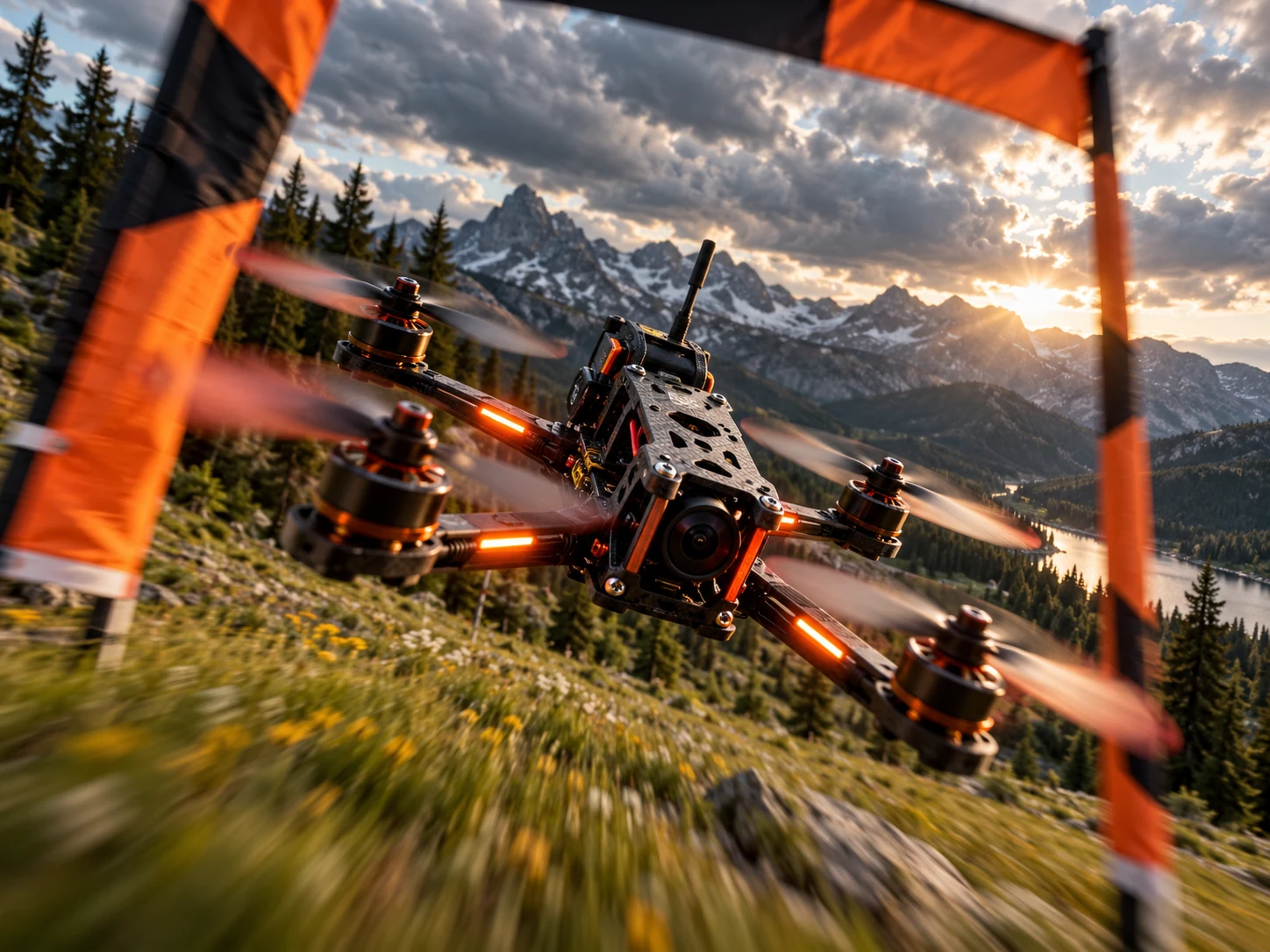

A first-time spectator’s guide to FPV drone racing: read the course, follow qualifying, understand heats and know what the results actually mean.
Start with the picture, not the jargon
A drone race can look chaotic on first viewing. Aircraft accelerate, change direction without warning and disappear behind gates while pilots remain seated away from the track. Begin by finding three things: the outline of the course, the start/finish point and the event’s official timing display. Once those are familiar, the action becomes easier to follow. A first-person-view feed is particularly useful because it shows the picture the pilot uses to steer rather than only the aircraft seen from the sideline. FAI describes FPV flying as piloting through a live onboard camera feed, typically using goggles or a screen. [F1]
Before the start: read the event format
A useful spectator habit is to check the event’s briefing or published rules before trying to predict what a result means. Some races use individual qualifying laps; others score a run across multiple laps. A heat may be a contest among several aircraft at once, or a session inside a broader progression format. The FAI account of F9U describes qualification, elimination and a final as a common structure, while MultiGP’s 2026 International Open illustrates just how much formats can differ between categories. [F1][M1]
Follow the gates and the clock
During a race, concentrate on the next gate rather than trying to track every aircraft continuously. Crossing the prescribed course correctly matters as much as raw speed. A quick-looking shortcut may not count if it omits a required element. On the broadcast, distinguish current position, completed laps, lap time and total time. These numbers answer different questions. The leader on screen may not be the eventual winner if the result requires a review, penalty or completion check. For formal outcomes, use the organizer’s published classification rather than a paused live graphic. [F2]
Qualifying is a clue, not a guarantee
A qualifying session measures performance under a stated method and helps establish the next stage. It does not automatically settle who will win a bracket or final. MultiGP IO 2026 includes categories using fastest consecutive laps, groups derived from qualifier rankings and a World Cup final bracket. These are distinct mechanisms, not one universal drone-racing rule. For a viewer, qualifying is most useful as context: who has shown pace, who starts in which group and whether consistency may matter more than one spectacular lap. [M1]
At the finish, look for the final classification
When the last aircraft crosses the finish, check the event’s official classification for the result, any penalties, tie-breaking rule and whether the session was qualifying or a final. If watching a replay, confirm that its date and event category match the caption. A highlight reel can show extraordinary flying without revealing the scoring system. If you want a next step, compare physical and simulated racing, then learn a handful of terms such as FPV, gate, heat and lap. You do not need to memorize a rulebook before enjoying a race. [F2][M1]
A first-race checklist
Before pressing play, write down the event name and year. Identify whether you are watching live coverage or a replay. Find the rule or event page that explains qualifying and advancement. During the race, watch the start line, one difficult gate and the timing graphic rather than constantly switching between pilots. After the finish, compare the on-screen order with the organizer's final classification. If one piece is missing, say so instead of guessing. This process works as a simple viewing habit even when the event has a format you have never seen before. [F1][M1]
What an exciting clip cannot tell you
A ten-second highlight may show a perfect overtake without revealing whether that run counted, whether a pilot advanced or which class the aircraft belonged to. Sports footage should carry the event name, format and date. For newcomers, a complete heat often teaches more than a collection of dramatic near-misses because you can see starts, recoveries and the finish in sequence. Whenever a result matters, favor the official score over promotional editing. [F2]
Sources and verification
- [F1] FAI Drone Sports overview — https://www.fai.org/page/drone-sports
- [M1] MultiGP International Open 2026 race formats — https://www.multigp.com/io26/race-formats/
- [F2] FAI Sporting Code 2026 — drone sports — https://www.fai.org/page/documents-and-rules
Related reading
Editorial scope: This is sports education, not wagering advice. No betting function or live market is offered here.
Sources and further reading
- FAI Drone Sports overview ↗
Consult the original document for the event, class and applicable date.
- FAI Sporting Code 2026 — drone sports ↗
Consult the original document for the event, class and applicable date.
Check the original document for its scope, date and current status.
Something needs a closer look?
Suggest a correction