
A clear guide to first-person-view flying, onboard cameras, goggles, video links and what spectators see during a drone race.
FPV means first-person view
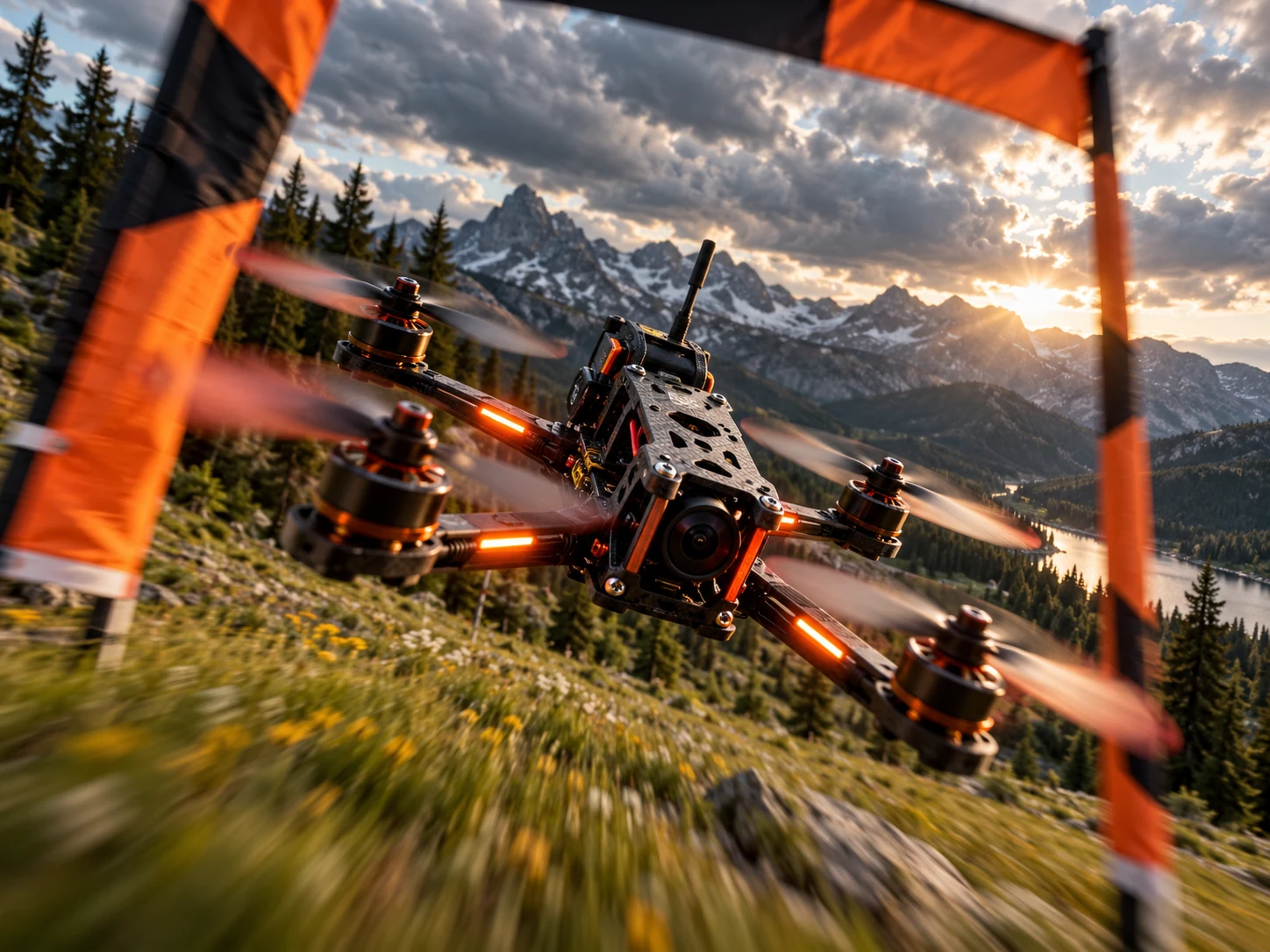
In drone racing, FPV refers to the pilot receiving a live image from an onboard camera and steering by reference to that image. The drone is still a physical aircraft in physical F9U racing, even though the pilot experiences its viewpoint through goggles or a monitor. FAI identifies this onboard video feed as a defining part of the racing discipline. FPV describes a mode of viewing and piloting, not a particular brand of aircraft or a guarantee that a flight is competitive. [F1]
How the image reaches the pilot
The camera captures the scene in front of the aircraft. A video-transmission system carries that image to compatible receiving equipment, where the pilot sees the course. The radio-control link and the video link serve different jobs: one carries steering commands and the other carries a picture. In practical use both have limits. An interrupted image or unreliable control link can seriously affect operation, which is why equipment checks and event frequency management matter. FAI’s event equipment guidance includes camera video transmission and radio-frequency monitoring. [F1]
Why it looks different from ordinary video
A ground camera helps a spectator understand where drones are relative to gates and one another. An FPV feed instead reveals how quickly the next opening arrives and how a pilot steers through a corner. The view can feel disorienting because the horizon tilts, the aircraft pitches into acceleration and obstacles approach quickly. Broadcasts often alternate FPV and external camera angles so viewers can connect the pilot’s perspective with the track map. Neither angle alone tells the whole story. [F1]
FPV is not synonymous with simulation
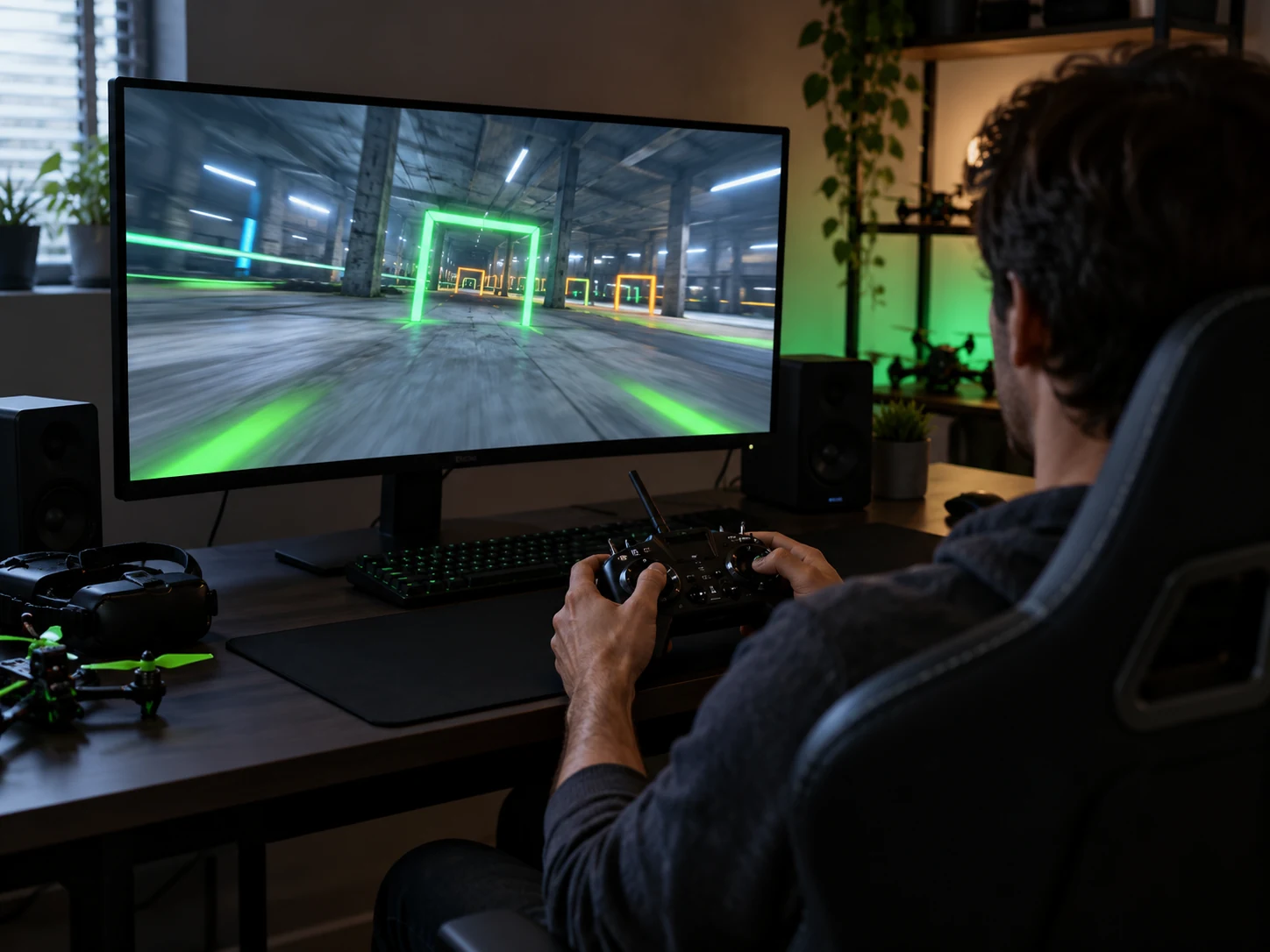
Virtual drone racing can imitate an onboard camera view, but there is no physical aircraft traveling through the depicted scene. FAI’s E-Drone Racing World Cup uses virtual circuits and computer-based controls. The pilot can still be a real person competing for a result. When labeling an image or clip, distinguish 'physical FPV race footage' from 'simulator capture'; the camera-like appearance of a screen is not enough to establish the race format. [F4]
Five terms worth learning next
The gate is an opening the course requires pilots to traverse; a lap is one prescribed circuit; a heat is a race within a larger competition; qualifying is the process used to seed or select entrants; and a video transmitter is one component of the FPV viewing system. Precise definitions may depend on an organizer’s published regulations. For a first event, these terms will make commentary far easier to follow than trying to learn every technical acronym at once. [F2]
The three useful camera perspectives
A side-of-track shot communicates relative positions and physical distance. A first-person feed communicates the pilot's steering workload. A track overview explains the sequence of obstacles. Editors who combine these perspectives give beginners a clearer account of a race than one angle alone. When possible, annotate the opening gate and direction of travel, but avoid adding unsupported telemetry values to visual illustrations. [F1]
FPV safety and clear terminology
FPV is not permission to fly anywhere without restrictions. A published race operates within its organizer's course and safety framework, and local aviation rules remain relevant to actual flights. A simulator is different because the flight is virtual. Beginners should learn the viewpoint concept first, then consult local rules and club guidance before operating an aircraft. This page explains a term; it is not a substitute for a flight-safety briefing. [F1][F4]
Sources and verification
- [F1] FAI Drone Sports overview — https://www.fai.org/page/drone-sports
- [F4] FAI E-Drone Racing World Cup — https://www.fai.org/edroneracingworldcup
- [F2] FAI Sporting Code 2026 — drone sports — https://www.fai.org/page/documents-and-rules
Related reading
Editorial scope: This is sports education, not wagering advice. No betting function or live market is offered here.
Sources and further reading
- FAI Drone Sports overview ↗
Consult the original document for the event, class and applicable date.
- FAI Sporting Code 2026 — drone sports ↗
Consult the original document for the event, class and applicable date.
Check the original document for its scope, date and current status.
Something needs a closer look?
Suggest a correction