Understand the essential aircraft, goggles, transmitter, camera, batteries and track systems seen around a drone-racing event.
Start with the aircraft
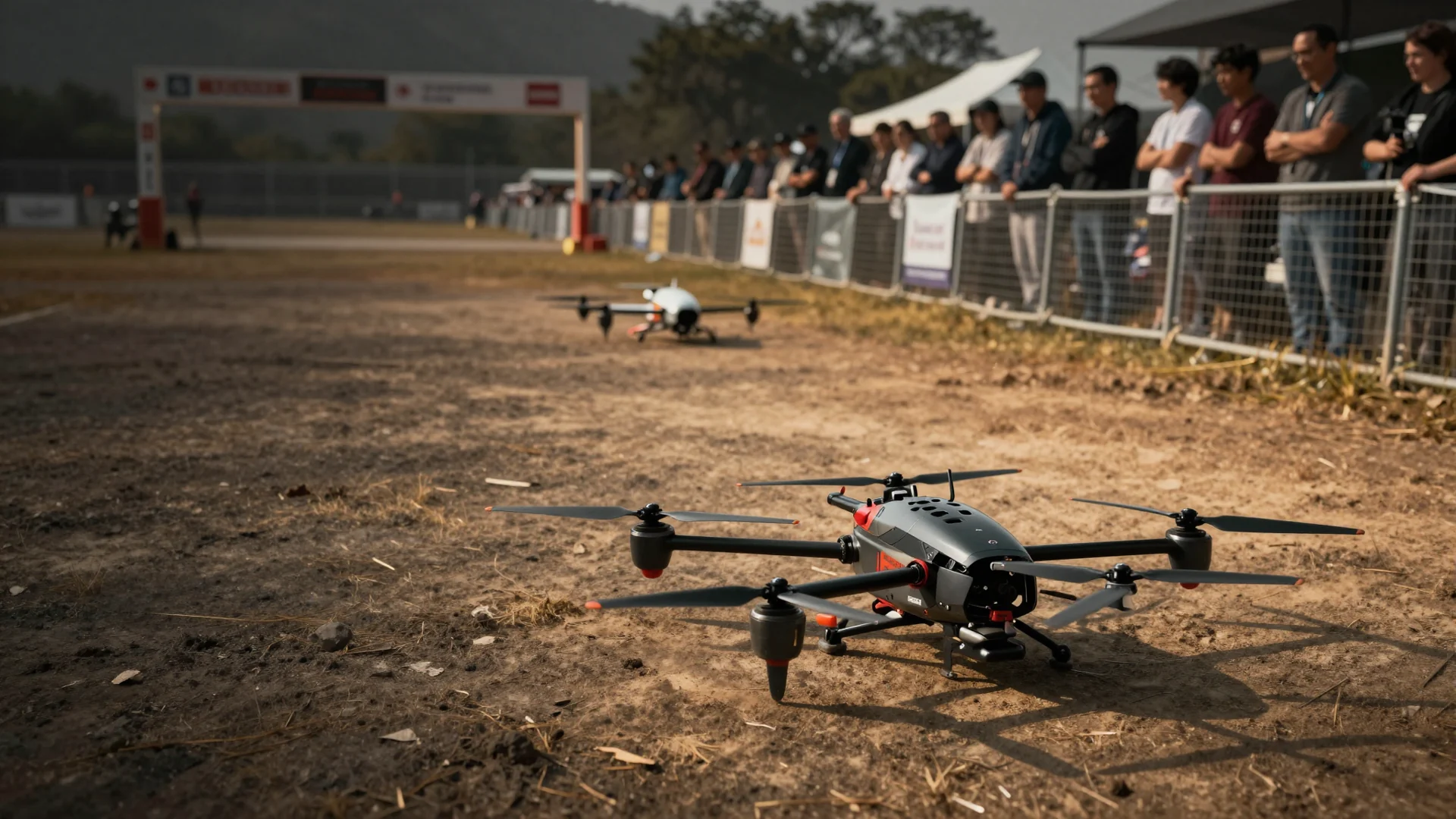
A physical FPV racing drone is a small remotely operated multi-rotor aircraft built to respond quickly to a pilot’s control. Motors and propellers produce movement, while the frame supports the electronics. FAI’s F9U discipline sets technical criteria for eligible models, so an aircraft permitted in one event is not necessarily allowed in every race. Spectators should avoid judging legality or compliance from the look of a drone alone. [F1][F2]
The radio and the video have different purposes
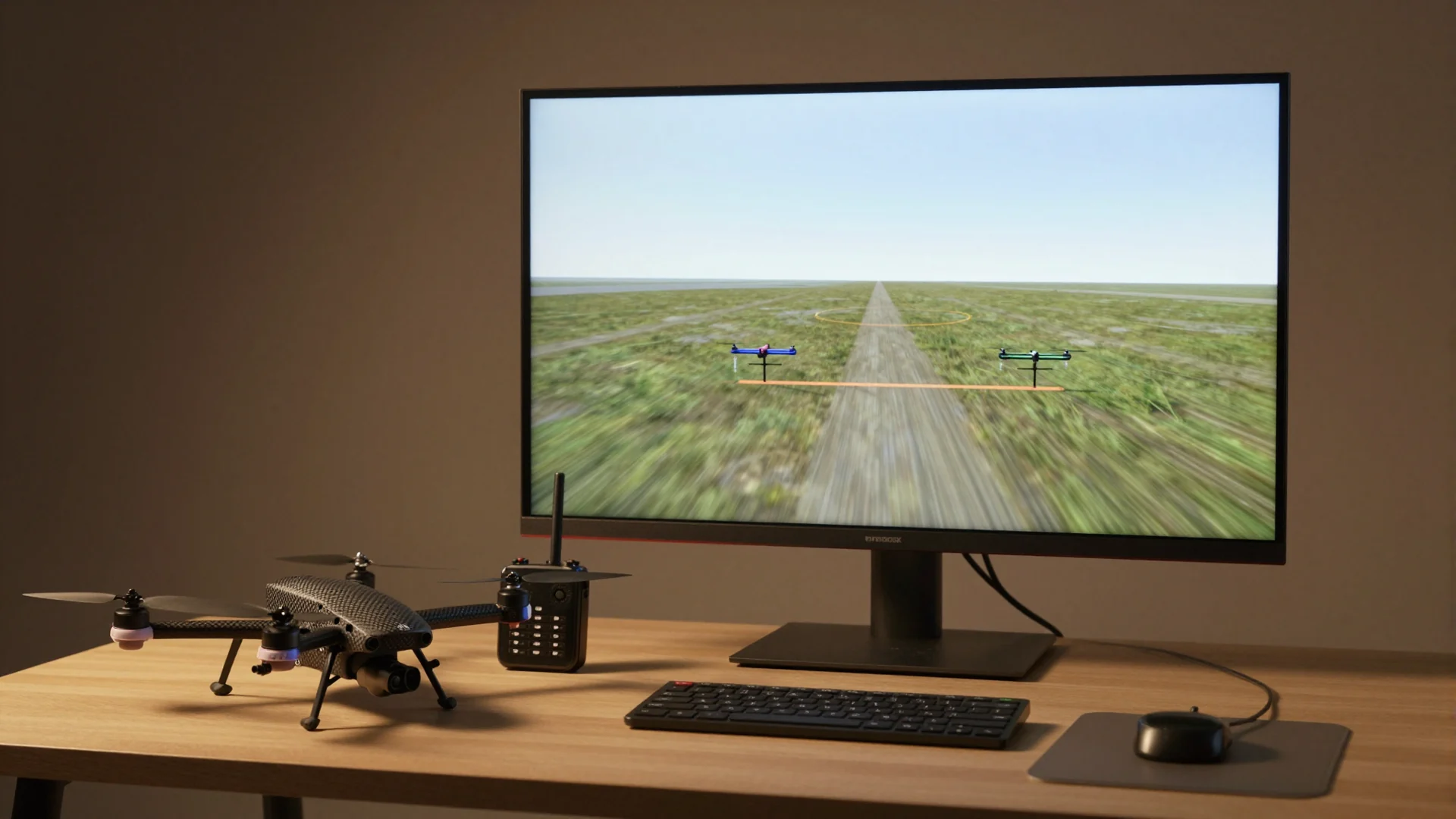
A handheld radio controller transmits steering commands to the aircraft. A camera on the drone captures the live picture sent to the pilot’s goggles or screen. These are related but different paths. An event may have specific requirements for radio-frequency management and video systems, particularly when several aircraft operate close together. FAI describes both camera-video transmission and radio monitoring as part of a competition’s technical setup. [F1]
Why goggles are so visible in photographs
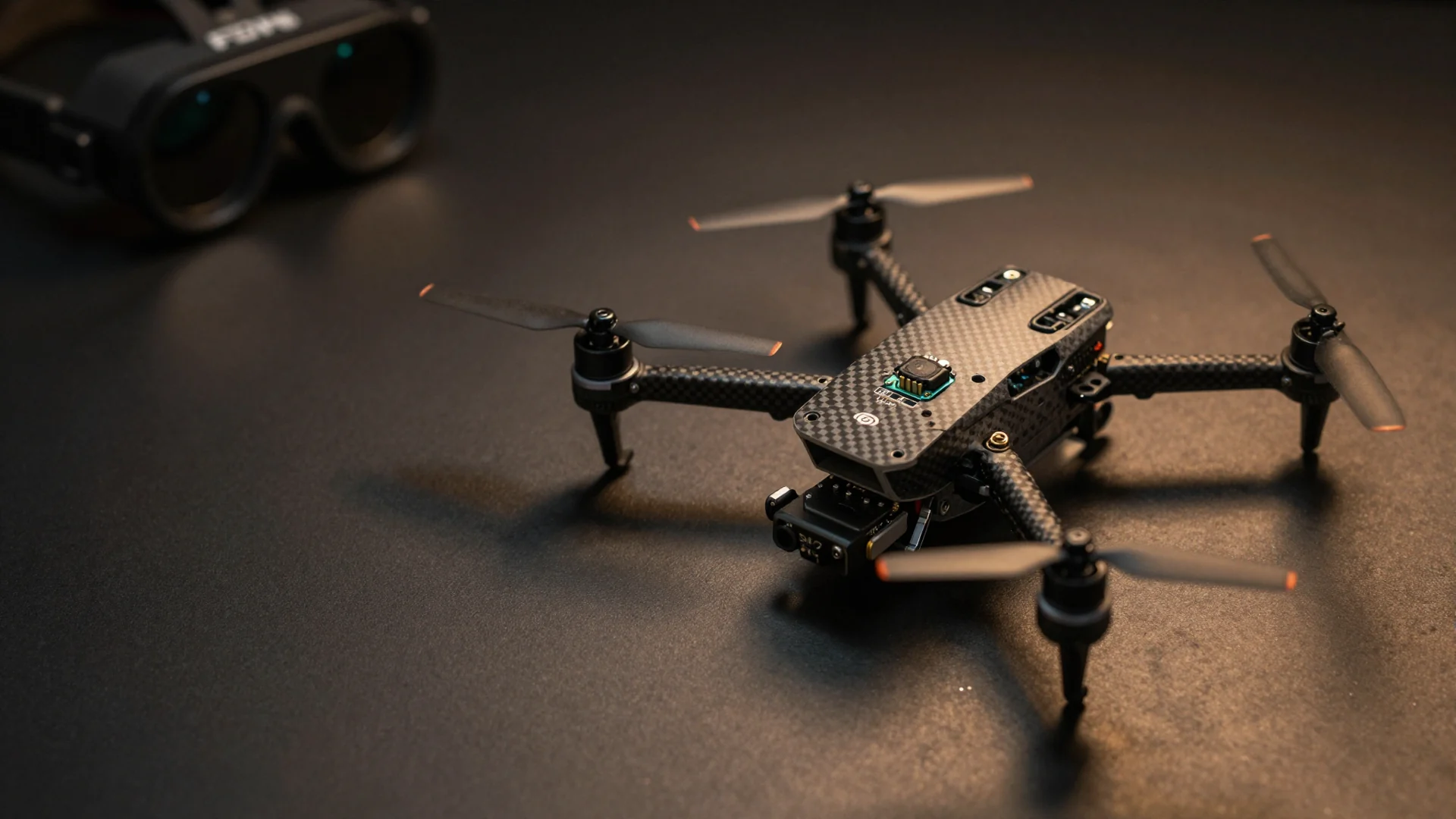
The FPV headset places the pilot’s perspective in front of the eyes and helps the person follow the course from the craft’s camera. This does not mean the pilot is physically inside the aircraft or that the camera always shows the whole race. Ground observers and broadcast cameras provide different views of the same event. A close-up photograph of goggles can illustrate this equipment, but it cannot establish who won a specific race without an independent official result. [F1]
Batteries, spares and the repair table
Fast flying puts demands on physical hardware. Between sessions, pilots or their support teams may check fasteners, propellers, batteries and video systems. Damage and repairs are ordinary considerations in a physical sport, but reporting a named team’s equipment choice requires a credible source or direct confirmation. It is better to describe the general function of a component than to claim that an unidentified photograph shows a particular branded setup. [F2]
The equipment spectators rarely notice
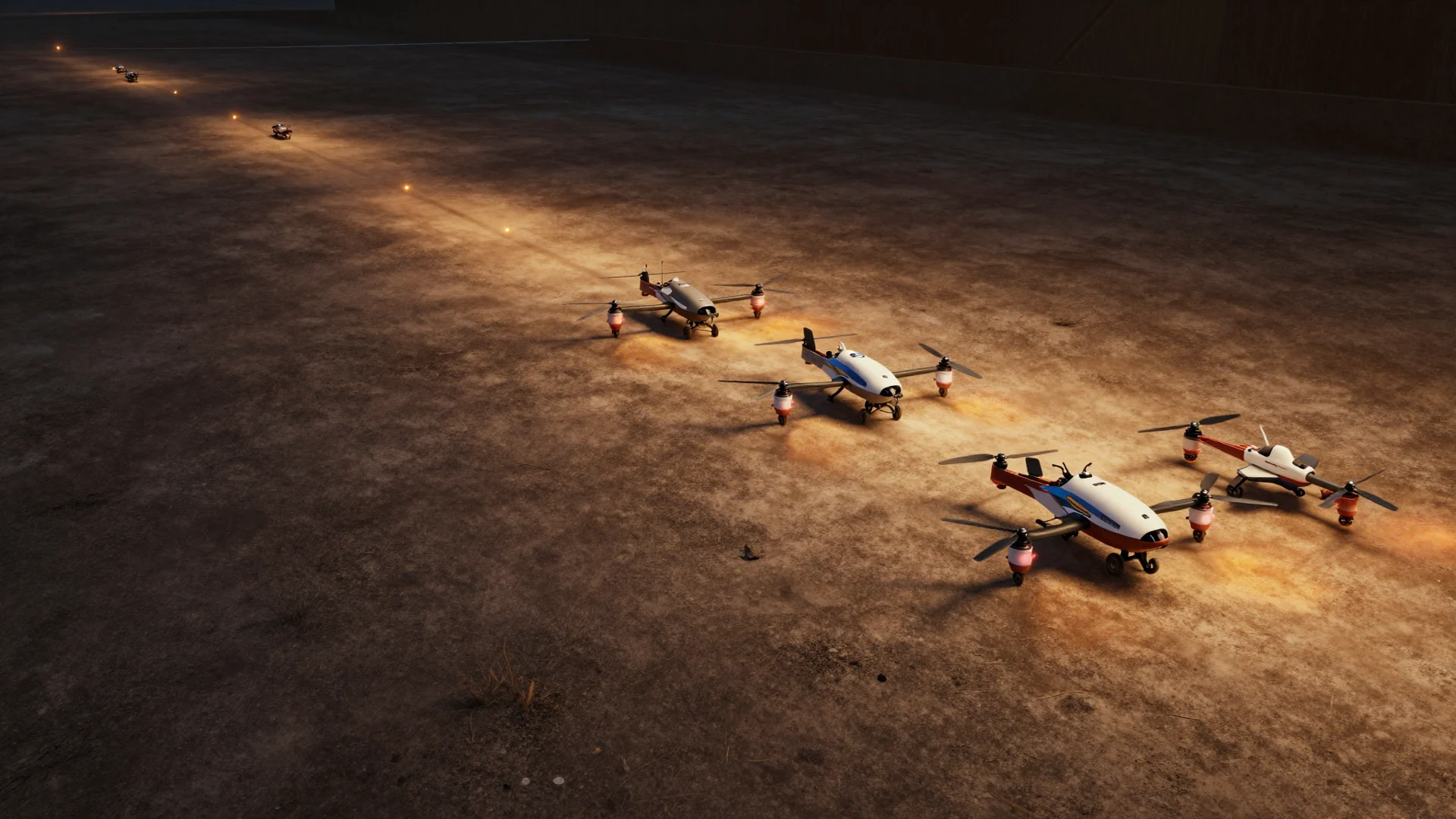
An organized race also needs gates, timing or results displays, course management, frequency coordination and officials. FAI lists video screens, software for schedules and results, and radio monitoring among contest equipment. These systems make results understandable for people who are not flying. A good beginner article should explain the function of these supporting tools as carefully as it explains the drone itself. [F1]
Reading an equipment close-up
A photograph of an aircraft can illustrate the position of motors, camera and propellers, but it may not reveal the battery limits, firmware or other conditions of a specific racing class. Some organizers publish precise specifications and may update them for the next edition. MultiGP IO 2026, for example, sets different class-specific equipment conditions. A reader should consult the applicable event page before drawing a compliance conclusion from appearance. [M1]
What viewers can learn from the pit area
The repair table is where much of the unseen race story takes place. A pilot checks hardware while officials prepare the next session. None of this requires a brand endorsement, and the editorial focus should stay on the purpose of the components and the teamwork around them. The best technical captions are clear about which details are verified and which are only visible in the photograph. [F1]
Sources and verification
- [F1] FAI Drone Sports overview — https://www.fai.org/page/drone-sports
- [F2] FAI Sporting Code 2026 — drone sports — https://www.fai.org/page/documents-and-rules
- [M1] MultiGP International Open 2026 race formats — https://www.multigp.com/io26/race-formats/
Related reading
Editorial scope: This is sports education, not wagering advice. No betting function or live market is offered here.
Sources and further reading
- FAI Drone Sports overview ↗
Consult the original document for the event, class and applicable date.
- FAI Sporting Code 2026 — drone sports ↗
Consult the original document for the event, class and applicable date.
Check the original document for its scope, date and current status.
Something needs a closer look?
Suggest a correction