Understand drone racing from aircraft and FPV cameras to courses, race stages, timing and the sport’s community.
The sport in one picture
Drone racing is a contest of controlled flight along a specified course. In physical FPV racing, pilots operate small multi-rotor aircraft using an onboard camera view while officials check course completion and competition results. FAI identifies F9U as its drone-racing discipline and describes multi-aircraft races on indoor or outdoor circuits. The challenge is not only reaching high speed; it is keeping a clean line through the course while responding to other pilots and the clock. [F1]
Aircraft and viewing equipment
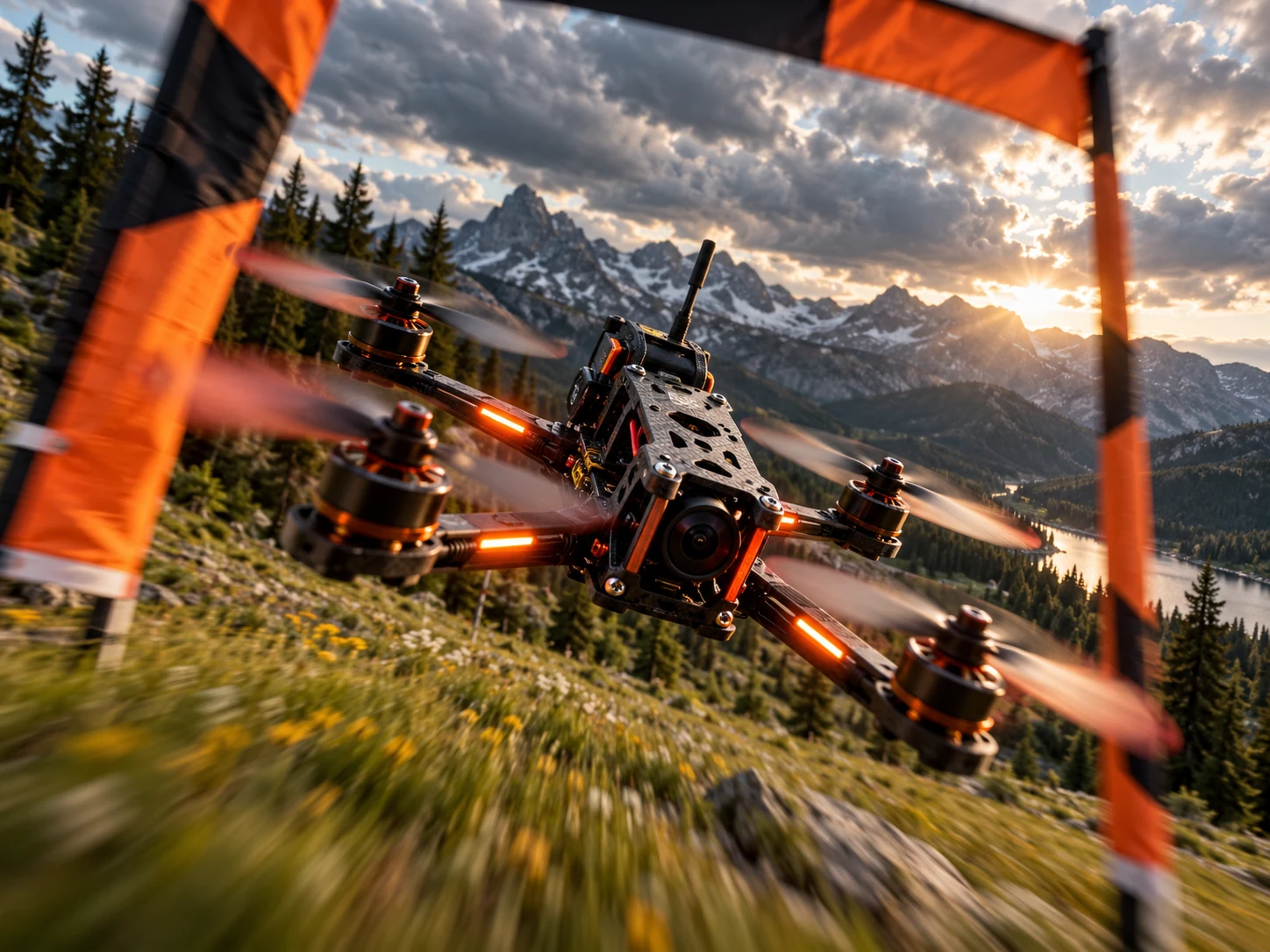
A racing craft uses motors and propellers for movement, radio control for steering inputs and a camera/video system for the pilot’s view. FPV goggles or a compatible screen present that video. On a race day the organizer also needs timing, frequency management, barriers where appropriate and an event-management process. Those supporting systems explain why an organized meeting looks different from informal flying in an empty field. [F1]
The shape of a competition
At a broad level, a contest can move from preparation to qualifying, races and final results. Practice lets participants familiarize themselves with the route. Qualifying may be timed under a specified method. Subsequent heats, brackets or elimination rounds determine who advances. FAI describes a common three-stage contest structure, but MultiGP IO 2026 documents several different qualification and finals mechanisms across classes. To interpret a specific result you must read that event’s rules. [F1][M1]
Why timing and accuracy belong together
A fast lap is valuable only when it satisfies the prescribed course. Gates, turns and finish lines create an objective challenge. Competition timing can track a single lap, consecutive laps or total time, depending on format. The official scoreboard translates those measurements into standings under its rulebook. Viewers should distinguish provisional live overlays from official results, especially when penalties or protests are still being considered. [F2][M1]
Physical racing and the digital counterpart
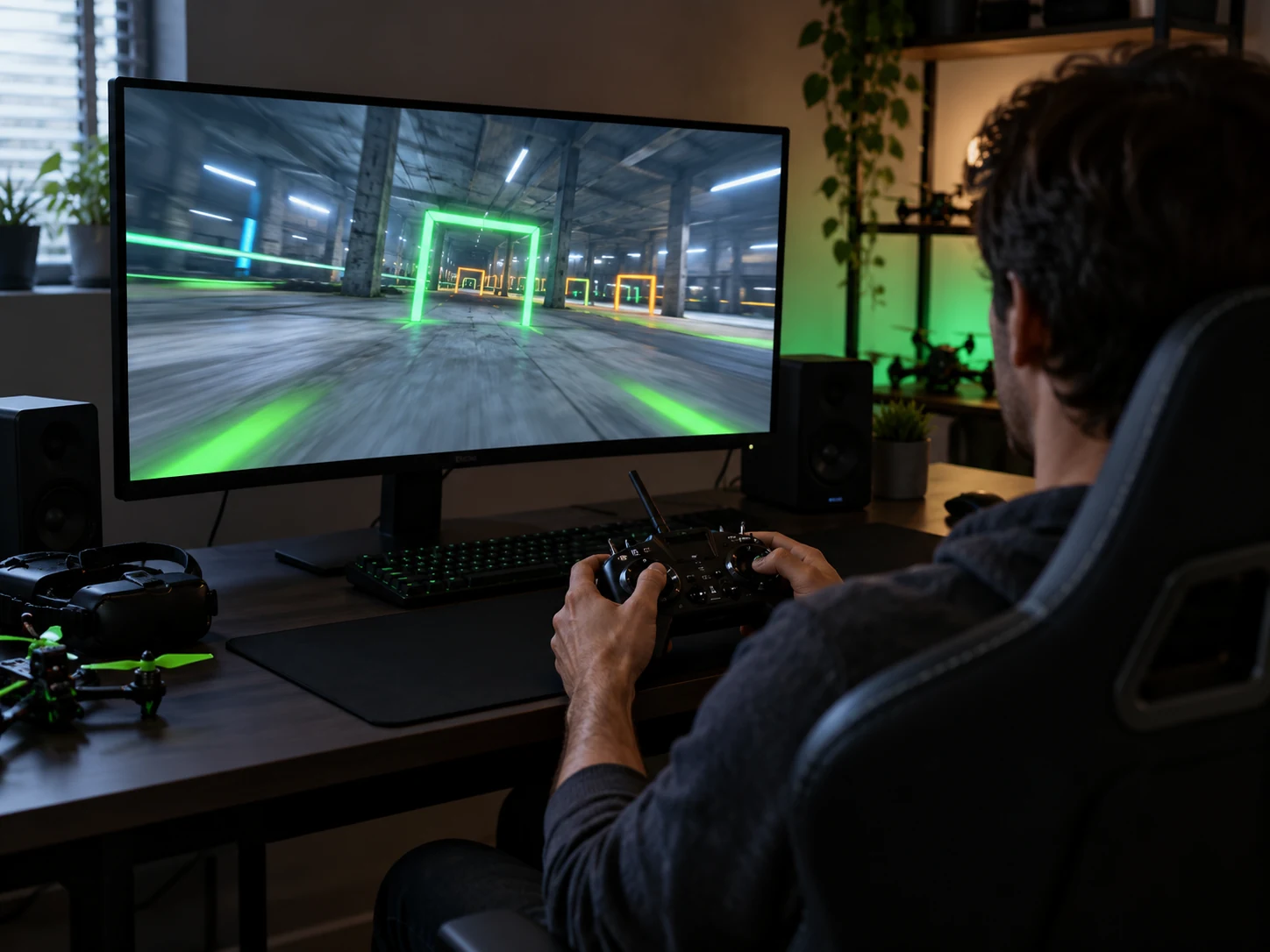
A simulator lets a person fly a virtual race course using computer-based controls. FAI recognizes a separate E-Drone Racing World Cup for virtual circuit competition. Simulator footage can be exciting and educational, but it is not documentary proof that aircraft flew through an actual venue. Physical and virtual racing can be discussed together as part of the community as long as the article labels each format accurately. [F4]
Where to go next
Watch one complete event rather than starting with isolated highlights. Identify the class, track, qualifier method and final. Then learn the terms FPV, gate, heat, lap and classification. Official organizer pages and rulebooks are more useful than a random 'best drone' claim for understanding the sport. A first race can be enjoyable without knowing every technical setting: follow the line through the gates, check the timing and find the story behind the pilots. [F1][F3]
The difference between a sport and an equipment demo
A fast drone video alone does not establish an organized competition. To call something a race, look for a named contest, a defined course, participants, a scoring method and some record of results. Informal flying and practice are valuable parts of the culture but should be described on their own terms. This distinction helps readers navigate search results where demonstrations, simulated races and official championship footage can appear side by side. [F1][F3]
A simple first-week learning path
On the first day, watch a complete race and focus on track order. Next, learn the difference between a single lap and an overall race time. Then compare physical and simulator coverage to understand what is real and what is rendered. Finally read an official event format and try to follow the bracket without a commentary track. That practical progression gives a beginner working literacy in the sport without presenting technical tuning instructions as prerequisites. [F1][F4][M1]
Sources and verification
- [F1] FAI Drone Sports overview — https://www.fai.org/page/drone-sports
- [M1] MultiGP International Open 2026 race formats — https://www.multigp.com/io26/race-formats/
- [F2] FAI Sporting Code 2026 — drone sports — https://www.fai.org/page/documents-and-rules
- [F4] FAI E-Drone Racing World Cup — https://www.fai.org/edroneracingworldcup
- [F3] FAI Drone Racing World Cup 2026 — https://www.fai.org/world-cups/drone-racing-2026
Related reading
Editorial scope: This is sports education, not wagering advice. No betting function or live market is offered here.
Sources and further reading
- FAI Drone Sports overview ↗
Consult the original document for the event, class and applicable date.
- FAI Sporting Code 2026 — drone sports ↗
Consult the original document for the event, class and applicable date.
Check the original document for its scope, date and current status.
Something needs a closer look?
Suggest a correction