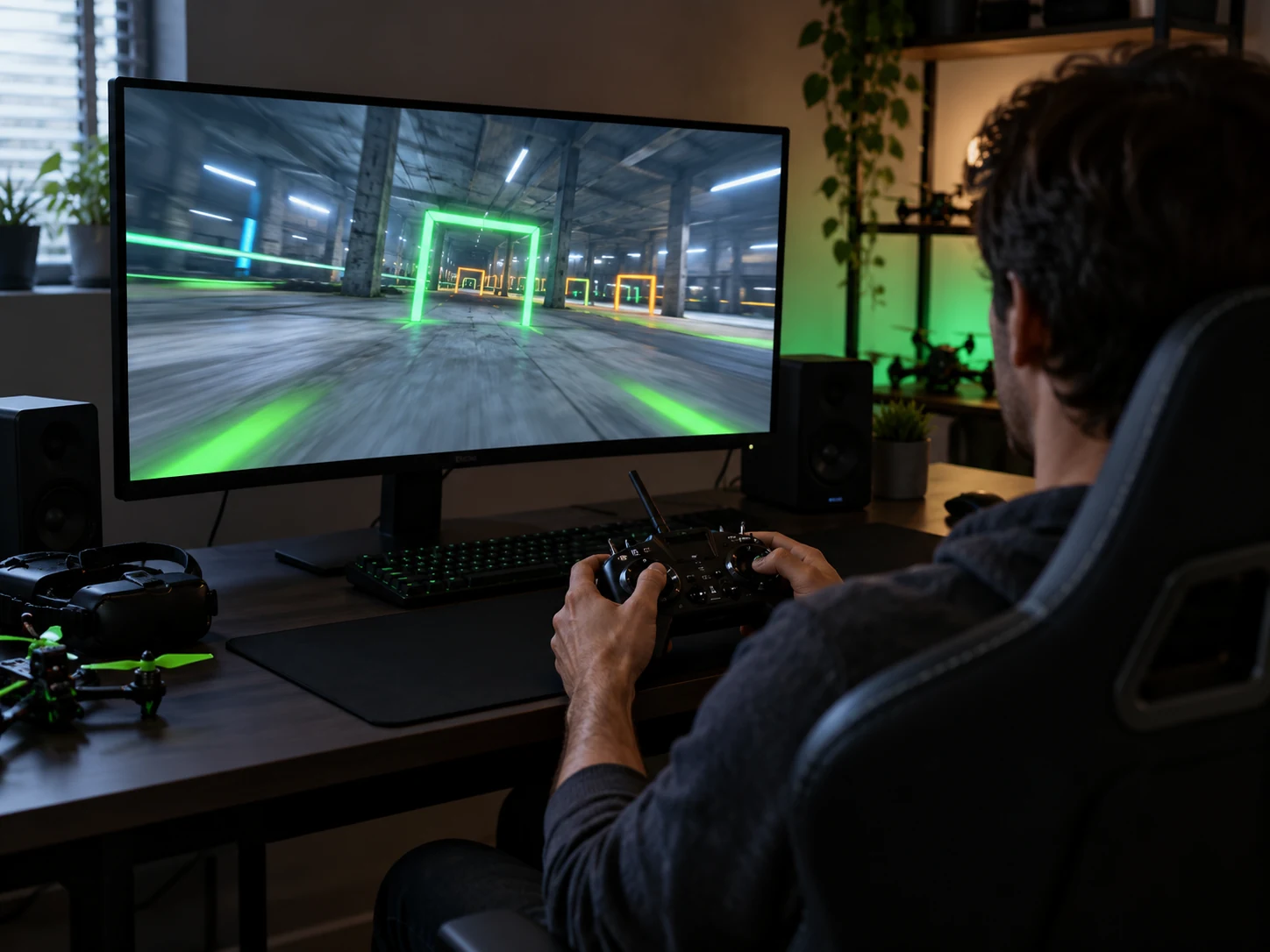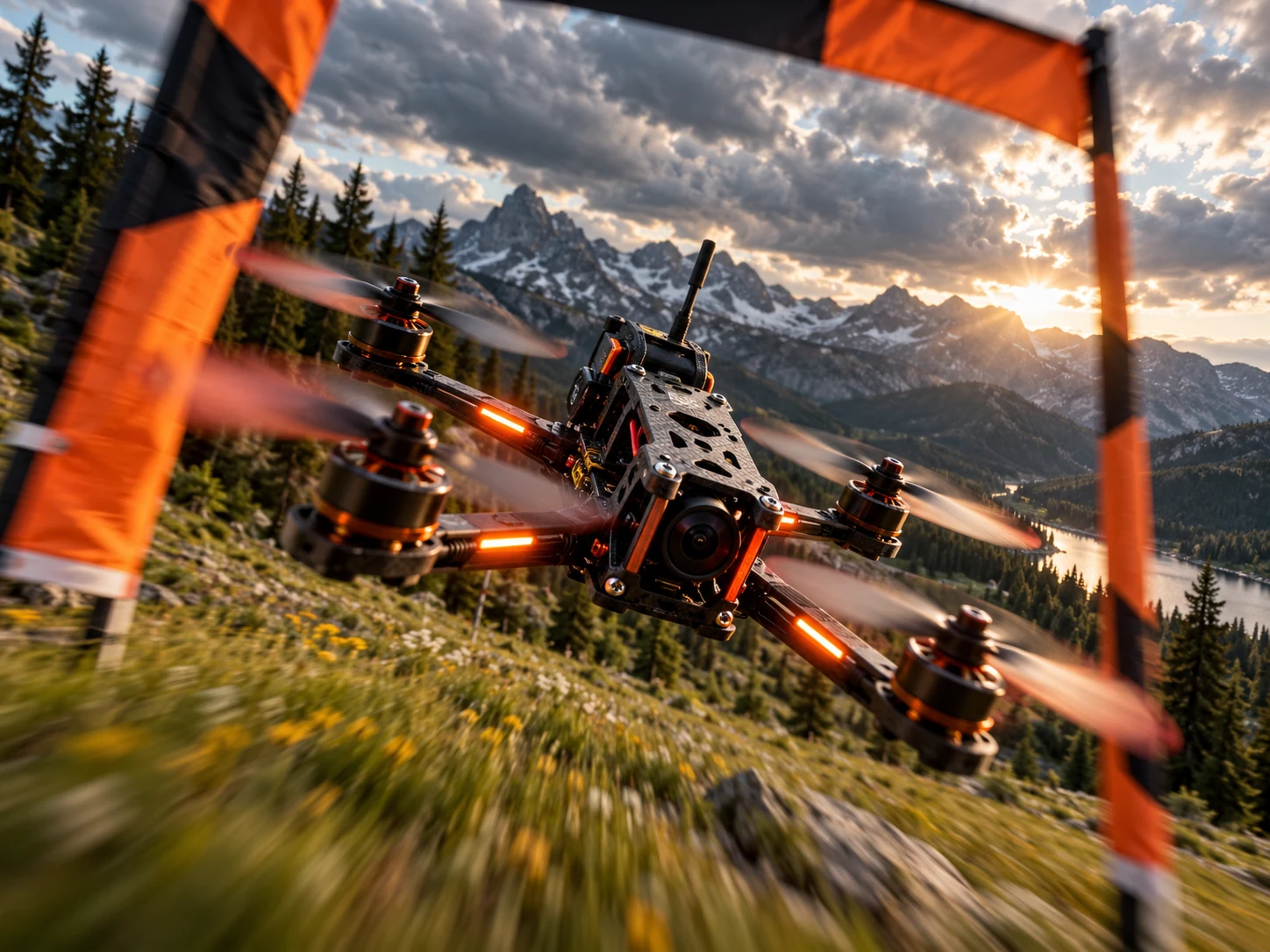
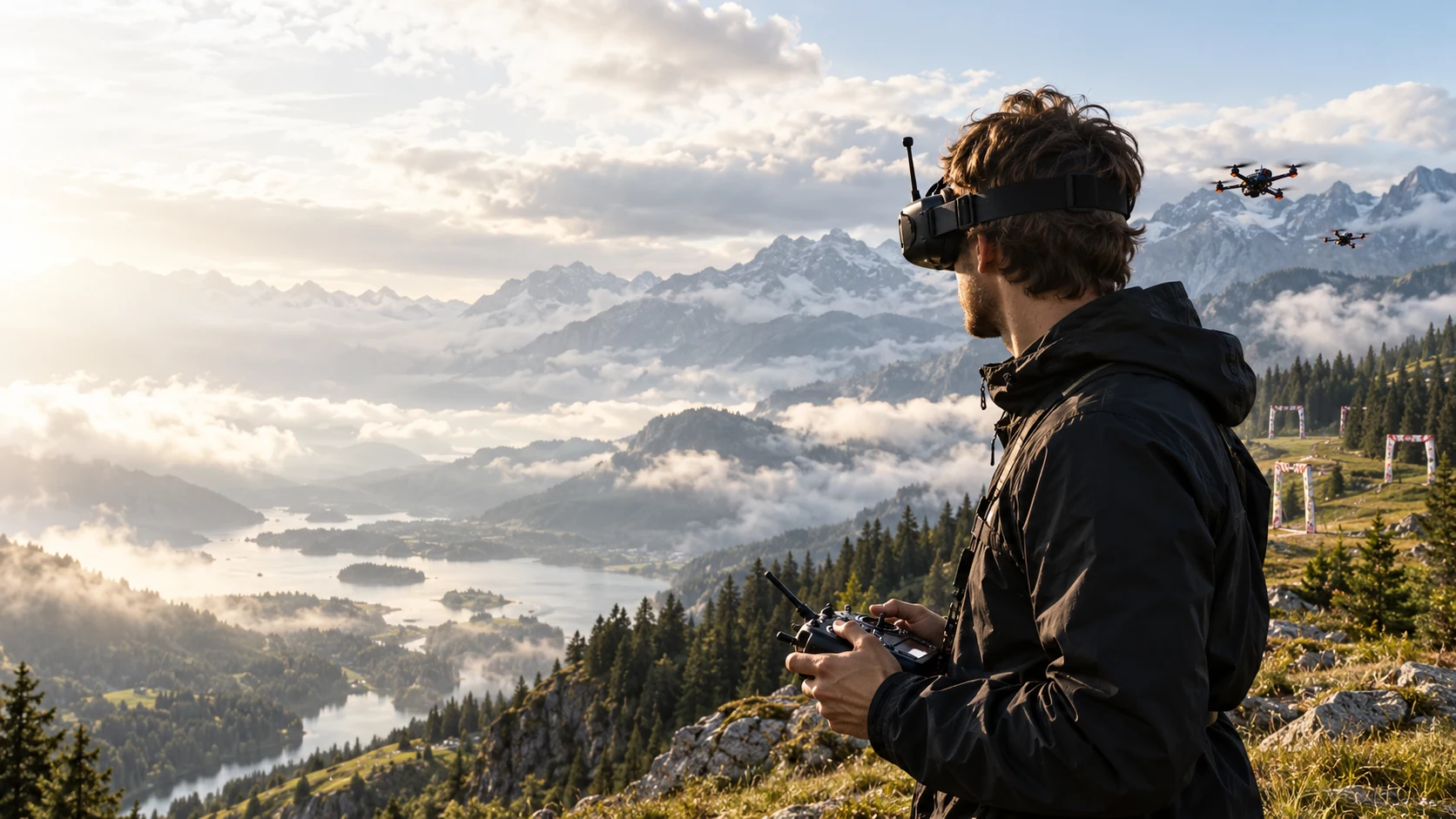
Meet the pilots, helpers, marshals, timekeepers and volunteers whose work turns FPV flying into a race.
The athlete is not alone
The pilot is the most visible person in drone racing, but a race needs more than fast reactions. A physical competition brings together assistants, officials, technical volunteers, organizers and often camera crews. FAI’s overview of F9U specifically describes the FPV pilot being assisted by a helper and lists the event officials needed to run a contest. Knowing these roles gives a spectator a better understanding of what happens between the flights. [F1]
Pilots and helpers
A pilot studies the course, adjusts an aircraft and makes continual steering decisions under pressure. A helper supports the pilot during the contest according to the applicable rules. That support is not a substitute for pilot skill: it is part of a controlled sporting environment where awareness and procedure matter. Equipment preparation, practice and safe staging take place before a memorable pass can happen on camera. [F1][F2]
The contest director and course officials
The contest director coordinates the event and its application of the published competition process. Marshals, judges and timekeepers have distinct responsibilities relating to the track, rule compliance and recorded results. FAI lists these roles for F9U competitions, together with officials processing results and a jury for safety and protests. The exact staff plan varies with event size and regulations, but none of those responsibilities is made up simply to fill an event program. [F1]
Builders and technical teams
A reliable race day also depends on people who inspect, repair and maintain flying equipment. Propellers, cameras, batteries and radio systems can demand attention between sessions. While a social video may show only the pilot raising a trophy, time spent troubleshooting is part of the wider culture. Content about an individual builder or team should be based on an actual interview, credited photographs or verified biography; generic stock pictures must never be presented as evidence of a named person’s work. [F2]
The community keeps it accessible
Local clubs and volunteer organizers create routes into the sport for newcomers. That may mean helping someone understand a spectator area, explaining a race format or identifying an official beginner resource. MultiGP’s chapter-oriented ecosystem is one example of organized grassroots participation. A good culture article credits real people where permission is available, but can still explain the roles and the atmosphere without inventing a pilot, a quote or a result. [M1]
What a race-day sequence reveals
A spectator who arrives before a heat may see officials checking the course, pilots preparing equipment and a director confirming the schedule. After the heat, timing and results staff reconcile the session record. Each stage demonstrates that the visible flight is only one part of an organized contest. A culture story becomes richer when it explains those transitions instead of assuming an event runs itself. [F1]
How to report on real people responsibly
Before naming an athlete, volunteer or organizer, establish their identity, role and permission to publish any personal account. Attribute quotes to a genuine interview or public statement, not to a generated character. If portrait rights are unavailable, use a licensed general scene and explain the role without implying it depicts the individual discussed. This is especially important for youth participants or private club volunteers. The absence of a portrait is not a reason to invent a biography. [F1][M1]
Sources and verification
- [F1] FAI Drone Sports overview — https://www.fai.org/page/drone-sports
- [F2] FAI Sporting Code 2026 — drone sports — https://www.fai.org/page/documents-and-rules
- [M1] MultiGP International Open 2026 race formats — https://www.multigp.com/io26/race-formats/
Related reading
Editorial scope: This is sports education, not wagering advice. No betting function or live market is offered here.
Sources and further reading
- FAI Drone Sports overview ↗
Consult the original document for the event, class and applicable date.
- FAI Sporting Code 2026 — drone sports ↗
Consult the original document for the event, class and applicable date.
Check the original document for its scope, date and current status.
Something needs a closer look?
Suggest a correction